The World in a Book by Elias Muhanna
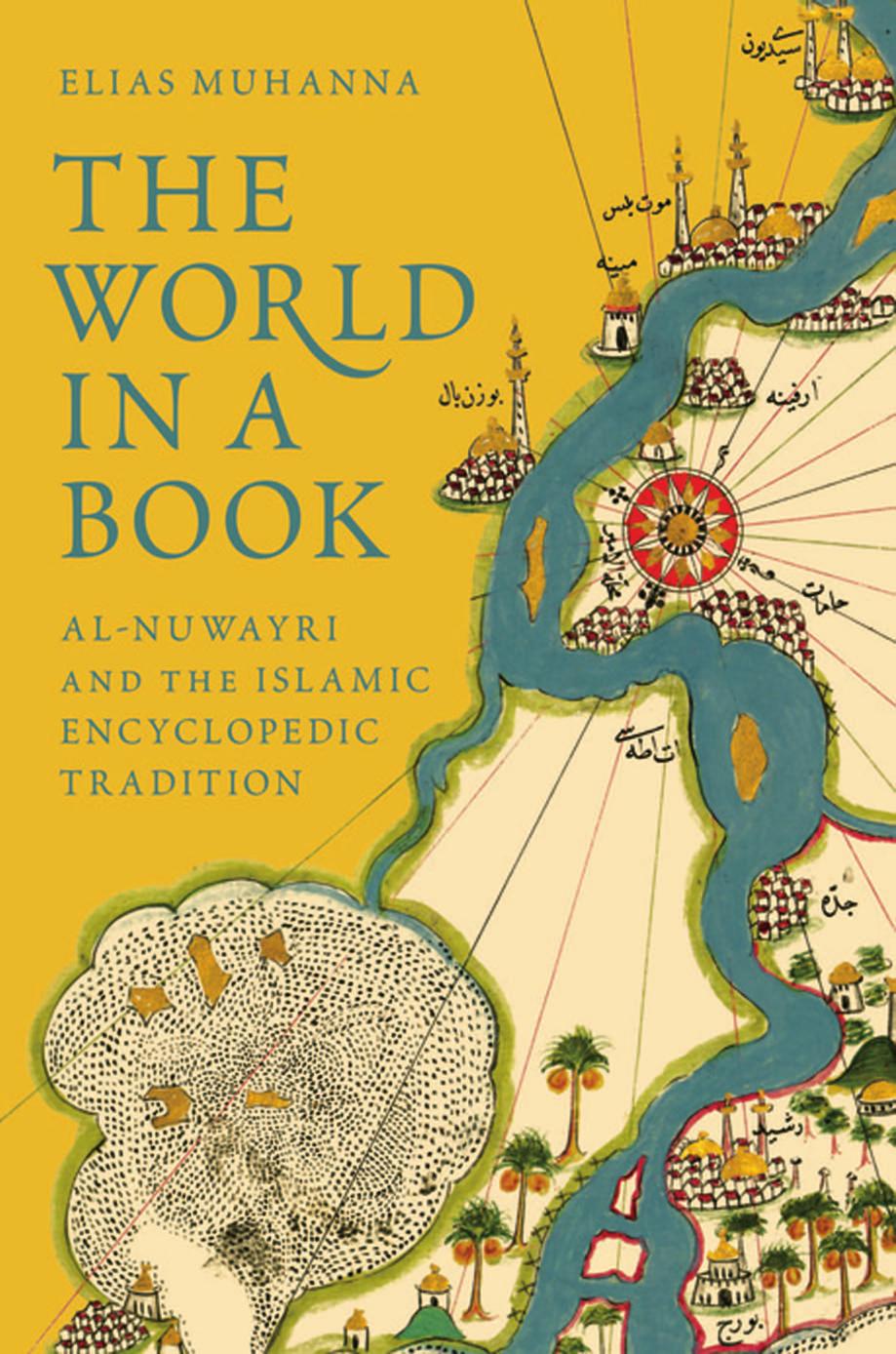
Author:Elias Muhanna
Language: eng
Format: epub, pdf
ISBN: 9781400887859
Publisher: Princeton University Press
Published: 2018-01-27T05:00:00+00:00
THE ART OF COPYING
Among the several thousand individuals discussed in The Complete Book of Biographies, al-Ṣafaḍī devoted a laudatory notice to his teacher, Shams al-Dīn al-Dhahabī, one of the greatest traditionists of his age and a preeminent compiler. Al-Dhahabī was himself the author of a massive biographical dictionary, The Lives of Noble Figures (Siyar aʿlām al-nubalāʾ), and a universal chronicle, The History of Islam (Tārīkh al-Islām), along with various other large-scale compendia. Describing his teacher, al-Ṣafadī wrote: “He compiled a great deal, and benefited many. He was very active in composition, making available through abridgment the nourishment found in lengthy works, and he wrote in his own hand an uncountable number of things.”11
The biographical literature of the period suggests that the practice of compilation encompassed a large sphere of activities, with a rich vocabulary of terms used to differentiate them, even if the boundaries between these practices were sometimes blurred. In al-Dhahabī’s obituary, al-Ṣafadī makes use of several of these terms: jamaʿa (collect, compile), taṣnīf (arrangement, classification), ikhtiṣār (abridgment), taṭwīl (enlargement), taʾlīf (composition), kataba bi-khaṭṭihi (writing in one’s own hand, as opposed to relying on an amanuensis). An active compiler was usually engaged in several related activities: reading the works of other authors; making notes and copying passages or entire volumes, sometimes into an aide-mémoire (tadhkira); abridging longer texts for one’s students or for the marketplace; enlarging texts through commentaries or super-commentaries; rearranging well-known works into different forms; and producing original compositions.
Here, we can see how the mechanisms of summary, amplification, and concatenation discussed in chapter 2 existed in practice, and it is not difficult to grasp how new compositions emerged from this matrix of activity. At the end of al-Nuwayrī’s discussion of secretaryship and its different branches and duties in the Ultimate Ambition, he turns to the subject of the specialized craft of copying manuscripts (kitābat al-naskh) and particularly scholarly texts (naskh al-ʿulūm).12
As for he who copies [works of] the sciences, such as jurisprudence, philology, the principles of jurisprudence and other things, it is most fitting and suitable for him not to begin writing anything until he has surveyed the subject, reading and familiarizing himself with it. This is so that he may be free from errors, copying mistakes, and substitutions, and so that he may know where to move from one chapter to another, from a question to an answer, from one section to another, from a fundamental principle to a derivative principle or vice versa, from an exception to an illustration or a digression that is unrelated to an important principle, or to the speech of a speaker, or the question of a questioner, or the objection of an objector, or the critique of a critic.
The copyist must know what he is saying and where he is heading, separating each quote with a dividing mark that indicates its completion, and highlighting the statement of someone other than himself with a mark indicating its significance. If he does not do this, he will be like a wood-gatherer at
Download
This site does not store any files on its server. We only index and link to content provided by other sites. Please contact the content providers to delete copyright contents if any and email us, we'll remove relevant links or contents immediately.
Periodization Training for Sports by Tudor Bompa(8271)
The Body: A Guide for Occupants by Bill Bryson(5096)
The MacArthur Bible Commentary by John MacArthur(4826)
The Sports Rules Book by Human Kinetics(4386)
What It Really Takes to Get Into Ivy League and Other Highly Selective Colleges by Hughes Chuck(3760)
Marijuana Grower's Handbook by Ed Rosenthal(3682)
The Sprouting Book by Ann Wigmore(3592)
The Martian by Andy Weir(3427)
Salt, Fat, Acid, Heat: Mastering the Elements of Good Cooking by Nosrat Samin(3147)
Harry Potter 4 - Harry Potter and The Goblet of Fire by J.K.Rowling(3073)
Sapiens and Homo Deus by Yuval Noah Harari(3071)
The Bread Bible by Rose Levy Beranbaum(3069)
The Marketing Plan Handbook: Develop Big-Picture Marketing Plans for Pennies on the Dollar by Robert W. Bly(3062)
Classic by Mary Berry(3012)
Martha Stewart's Baking Handbook by Martha Stewart(2860)
Screenplay: The Foundations of Screenwriting by Syd Field(2642)
The Plant Paradox by Dr. Steven R. Gundry M.D(2620)
50 Economics Classics by Tom Butler-Bowdon(2571)
The Cambridge Grammar Of The English Language by Rodney Huddleston Geoffrey K. Pullum(2430)
